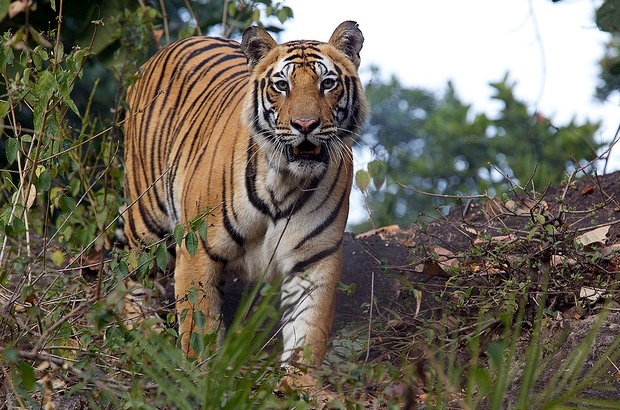
Showing posts with label Project Tiger. Show all posts

Wednesday, October 30, 2013

The Protected Reserve of Periyar National Park

Periyar National Park in Kerala, India is both a National Park and a wildlife sanctuary. Periyar Wildlife Sanctuary and Thekkady are the two other names by which it is referred. Over 950 square km of land is under protection out of which 350 square km is the core area. It is on the border with Tamil Nadu and lies in the middle of Cardamom Hills’ mountainous area. Periyar National Park (or PNP) is a well-known wildlife attraction of south India. Here are some interesting things to know about this park.

1. Periyar National Park was established in 1982 with the 350 km2 of the protected area as its core area.

2. The Cardamom Hills and Pandalam Hills surround the PNP which makes it a very picturesque place.

View inside Periyar National Park
3. The park derives its name from the Periyar River, which is one of the few perennial rivers in the region.

4. There is a beautiful lake inside the wildlife sanctuary, called the Periyar Lake, which came into existence after the construction of the Mullaperiyar Dam on Periyar River.

Mullaperiyar Dam
Submerged trees in Periyar Lake
5. PNP is a part of Project Tiger that aims to preserve the tiger population in India.

6. Besides tigers, dholes, gaur, sambar, wild pig, Indian giant squirrel, Travancore flying squirrel, jungle cat and sloth bear are some of the mammals of this park.

Dholes in Periyar National Park
7. This park was also taken under Project Elephant to ensure the safety of the elephants in this park.

8. Around 265 species of migratory and resident birds can be seen here. The tropical evergreen and moist deciduous forests provide an excellent habitat for the birds.

9. The best way to see wild creatures and birds in Periyar National Park is a boat cruise in Periyar Lake. Besides boat cruise, jungle safaris are also available to explore PNP.

Boat Cruise on Periyar Lake
10. The best time to visit Periyar National Park is from October to June (visit here for more information) when the weather is favourable.

Our Entry for ABC Wednesday - P is for Protected Reserve of Periyar National Park

Friday, October 11, 2013

Manas National Park - Home of Endangered Species

Manas National Park is located in Assam, India.  It spreads in an area of 360 square km. Name of the park is placed over the Manas River. The park is basically known for its rare & endangered wildlife species like Assam Roofed Turtle, Hispid Hare, Golden Langur and Pygmy Hog and is part of Project Tiger. Manas National Park was declared a wildlife sanctuary on October 1, 1928 and also listed in the UNESCO world heritage sites in 1985. Here, some of the best features of the park are given:-

Manas National Park
1. It is a perfect home for wild buffalo, elephant, tiger, rhino and for the thousands of endangered species that listed in the IUCN Red Book. Asiatic buffalo is one of the highlighted species of this park. It is a paradise for these species.

 
Elephants in Manas National Park
2. Flora of the park is gives it a picturesque view. The main vegetation of the park includes Sub-Himalayan light Alluvial Semi-Evergreen forests in the northern part; East Himalayan mixed Moist and Dry Deciduous forests, Low Alluvial Savanna Woodland and Assam Valley Semi-Evergreen Alluvial Grasslands. Assam Valley Semi-Evergreen Alluvial Grasslands covers around 50 % of the park.

View of the hills inside Manas National Park
3. Total 543 species of plants, 374 species of dicotyledons, 139 species of monocotyledons and 30 species of pteridophytes & gymnosperms are available there.

4. Fauna of the park include 55 species of mammals, 380 species of birds, 50 species of reptiles and 3 species of amphibians.

Langur in Manas National Park
5. The popular faunal species are Asian Elephants, Indian Rhinoceros, Gaurs, Asian Water Buffaloes, Indian Tigers, Leopards, Clouded Leopards, Capped Langurs, Asian Golden Cat, Slow Loris, Assamese Macaques, Barking Deer, Chital, Black Panther, etc.

6. Manas National Park has more than 450 species of birds and has the largest population of Bengal Florican that attracts most of the people towards it.

Bengal Florican - Image by NaveenGuruprasad on flickr.com
7. The major bird species include Giant Hornbils, Kalij Pheasants, Egrets, Pelicans, Brahminy Ducks, Scarlet Minivets, Fishing Eagles, Herons, Harriers, Mergansers, Magpie Robins, Bee-Eaters, etc.

8. More than 50 species of reptiles are available there. Jeep safari and an Elephant safari are available there to explore the park perfectly. It may be a thrilling experience to watch the animals from the open roofed jeeps and is great fun also.

Indian Rhinoceros
9. The climate of the park varies from season to season. The minimum temperature is approximately 15 degrees Celsius and approximately 37 degrees Celsius is the maximum temperature in all the seasons. Heavy rainfall also occurs during the summer season, i.e. from May to September.

10. Best season to visit Manas National Park (Source of information) is between November and April as during these seasons, one can see the local animal species as well as the migratory birds. Time to visit the park is from 9 to 12 AM and from 2 to 5 PM.

Our Entry for ABC Wednesday.

Wednesday, September 25, 2013

Kanha National Park – Land of the Jungle Book

Kanha National Park is a tiger reserve in Madhya Pradesh, central India. The forests of Kanha are spread over the Mandla and Balaghat districts, and the area of neighboring Phen Sanctuary adds-up to form the Kanha Tiger Reserve. In 1879, the jungles of Kanha became a forest reserve and in 1933, it gained the status of a wildlife sanctuary. Kanha National Park is often referred to as the land of the Jungle Book because Joseph Rudyard Kipling found his inspiration for his novel here. Here are some interesting things to know about this park.

1. Kanha National Park was established on the 1st of June in 1955.

Bengal Tiger - Kanha National Park
2. Kanha’s core area covers about 940 km² with 1,067 km² of surrounding buffer zone. This makes Kanha the largest National Park in central India. The core area of the Kanha tiger reserve is protected under the Project Tiger initiative.

3. Jungle Book, written by the famous English writer Joseph Rudyard Kipling, was inspired by the wild creatures and dense forests of Kanha.

Joseph Rudyard Kipling
4. Many of the wild creatures of Kanha National Park are depicted as characters in the Jungle Book like Baloo the bear, Bagheera the black panther and Shere Khan the tiger.

5. It is among the best places in central India for wildlife safaris and watching tigers in the open wilds.

Bengal Tiger 
6. Bengal Tigers dominate the forests of Kanha. Foxes, jackals, leopards and wild dogs are the other carnivores in the reserve.

7. The grasslands of the Kanha National Park are vital for the survival of the swamp deer population as many important species of grass grows there. Sambhar, Chital and Gaur are other commonly seen creatures inside the park.

Swamp Deer - Image by David Schenfeld on flickr.com
8. Over 1000 species of flowering plants can be found in this park. Sal and bamboo trees are also found in abundance.

9. Except from July to mid November, this park remains open for tourist activities throughout the year.

10. Bamni Dadar is a sunset point where tourists can easily spot sambar, barking deer, gaur and four horned antelope in the evening. Kanha Museum is another interesting place to go and have more knowledge about the park. Kanha National Park is counted among the must visit destinations in Madhya Pradesh.

Kanha Museum
Our Entry for ABC Wednesday.

Tuesday, September 10, 2013

An Insight Inside Dudhwa National Park

The lesser famous Dudhwa National Park lies on the edge of India-Nepal border in the foothills of the Himalayas. It is located in Lakhimpur Kheri, the largest district in the state of Uttar Pradesh. The vast marshy grasslands and dense forests protect many endangered species of flora and fauna. This park has some of the best Sal tree forests in the world. Despite being rich in wildlife and natural beauty, Dudhwa National Park remains a less popular tourist destination. Let us take an insight inside the Dudhwa National Park.

1. Dudhwa National Park was established in 1958 as a wildlife sanctuary for the protection of Swamp deer population in the area.
Swamp Deer
2. The area of the park stretches to about 490.3 square km with a buffer zone of 190 square km.

3. This park is home to some of the best remaining grasslands and forests of the Terai belt in the Himalayas.

4. It was elevated up to the status of a national park in 1977 and became a part of Project Tiger in 1987.

5. Billy Arjan Singh played an important role in establishing this protected area as a national park.

Billy Arjan Singh
6. The major attraction of this park is the ‘Barasinghas’ (Swamp Deer). It is estimated that around half of the world’s population of Swamp Deer lives in this park.

7. Reintroduced Bengal Tigers also thrive in the rich Terai ecosystem. Beside these, Indian one-horned rhinoceros and the rare Hispid Hare also make this park their home.

8. The uncharted forests of Dudhwa are a treat for bird-watching. The checklist of birds in the park goes up to 400 species. This includes both migratory and resident birds.

9. While visiting the Dudhwa National Park, one can also make a tour to the Frog Temple. It is a temple dedicated to Lord Shiva. The design of the temples follows the unique Manduk Tantra and appears to be built on the back of a giant frog.

Frog Temple
10. The best time to visit the Dudhwa National Park would be after November till early June.

Following the trend of ABC Wednesday
I for Insight and Inside

Thursday, August 29, 2013

Wildlife and Glamour in Corbett National Park

The Jim Corbett National Park is located in Uttarakhand’s Nainital district and is a major tourist destination for wildlife tours. It is located in the outer foothills of Himalayas and is a biosphere of a variety of plants and animal species. It is one of the best places in north India for tiger tours. But, the natural beauty of the park has attracted many others than just wildlife tourists. Corbett Park has caught the eye of the glamorous Bollywood in the recent years. Here are few interesting things to know about Corbett National Park.

1. Established in 1936 with an area of 520 sq. km, Corbett National Park is thus, the oldest national park in India.

2. Edward James Jim Corbett was a renowned British hunter who later turned a conservationist. He played a crucial role in the establishment of this park.

Edward James Jim Corbett
3. The initial name of this park was Hailey National Park, which was then changed in 1955 to Ramganga National Park. It was finally named Jim Corbett National Park in 1956.

4. With its sub-Himalayan geographical and ecological characteristics, one can find an amazing 488 different species of plants and 110 tree species throughout the park.

5. Corbett National Park is home to around 580 species of birds, 50 mammal and 25 reptile species respectively.

Jeep Safari-Jim Corbett National Park

6. It was the first park in India that came under Project Tiger.

7. The main attractions of the park are the Asian elephants and the Royal Bengal Tigers.

Elephants in Jim Corbett National Park


8. In 2005, a Bollywood horror movie named ‘Kaal: The Jungle’ was shot inside the park.

9. Also, the 5th season of an Indian television reality show called MTV Splitsvilla was shot near the Corbett Park. This show was aired on MTV India channel.

10. The Ramganga Dam inside the park is an amazing place for bird-watching.

For some more details, you can visit:

Wednesday, August 14, 2013

Into the Wilderness of Bandipur National Park

The Bandipur National Park in the Karnataka state of India is a home to many endangered species of wild animals. It was established in 1974 as a national park by the government of India. This park covers an area of about 874 square km and is a part of the Nilgiri Biosphere Reserve. The dry deciduous forests of Bandipur are listed as a protected area under the Project Tiger. Here are some interesting facts about the wilderness of Bandipur National Park.

1. Bandipur National Park is located in the Chamarajanagar district of Karnataka and was declared a national park under Project Tiger in 1974.

2. It lies at the point where the Western Ghats merges with the Nilgiri Hills and is dominated by dry deciduous forest.

Bandipur-National-Park

3. Bandipur National Park along with neighboring Nagarhole National Park, Mudumalai National Park and Wayanad Wildlife Sanctuary forms the Nilgiri Biosphere Reserve. Nilgiri Biosphere Reserve is the largest protected area for wildlife in southern India.

4. Before gaining the status of a national park, the forests of Bandipur served as the hunting ground for the Maharaja of the Kingdom of Mysore.

Bandipur-National-Park-Riverside

5. The Kabini River flows on the northern side and the Moyar River on the southern side of the park. Another river, Nugu, flows through the park and thus, providing plenty of water supply.

6. The main wildlife attractions of the park are the Royal Bengal Tigers, Asian Elephants and the Chittals. The best time to visit Bandipur National Park is between April and October.

Wildlife-in-Bandipur-National-Park

7. Over 200 species of birds can be found in Bandipur National Park. This makes it quite famous for observing birds among bird-watchers and wildlife photographers.

8. It is a major wildlife weekend getaway destination from Ooty and Mysore, the two major tourist destinations in southern India.

9. Himavad Gopalaswamy Betta is the highest peak located inside the core area of the park and is a great place to spot elephants. There is a temple on the hilltop, which is a famous tourist attraction.

Himavad-Gopalaswamy-Temple-Bandipur-National-Park

10. Traffic moment is banned from night to early morning for the safety of the nocturnal animals inside the park.

Friday, August 9, 2013

Bandhavgarh – The Land of Tigers and Legends

Bandhavgarh National Park in the Umaria district of Madhya Pradesh was established in 1968 to protect the tiger population. This National Park is home to a wide variety of wild species of animals and plants. It is a popular destination for wildlife tourism in central India. Also known as the land of tigers, Bandhavgarh National Park is related to many legends. It has much more to offer to its visitors both in terms of wildlife and tourist attraction. Here are some interesting facts about Bandhavgarh.

1. Bandhavgarh National Park derives its name from an ancient fort called the Bandhavgarh (in Sanskrit) which literally means ‘brother’s fort’. It is located in the centre of the park on a hill top.

2. This park was established in 1968 by the Government of India under the Project Tiger.

Tiger-in-Bandhavgarh-National-Park


3. Before it was established as a national park, the forests of Bandhavgarh and its surrounding areas were used a gaming preserve (hunting ground) for the kings of Rewa kingdom.

4. Bandhavgarh National Park has the highest density of tigers among all the other National Parks in India.

5. It is also the first place in India where the rare white tiger was found.

Bandhavgarh-Fort-Ruins


6. The Bandhavgarh Fort, now in ruins, inside the park is said to be the oldest fort in the world that dates back around 2000 years.

7. According to Hindu mythology, Lord Ram gave this fort to his brother Lakshman after the epic battle with Ravan, to keep a watch over Lanka. Lord Ram is the seventh avatar of the God Vishnu.

Caves-in-Bandhavgarh-National-Park


8. There are many ancient caves in and around the fort with amazing carvings and sculptures.

9. Sita, of the tigress that lived in the forest is said to be the most photographed tiger in the world and also appeared on the cover National Geographic magazine.

Sita-on-National-Geographic-Magazine


10. Besides tigers, Leopards, Chital, Sambar, Barking deer and Nilgai are some of the wild creatures found in this park. Bandhavgarh National Park also has a sound population of bird species, both resident and migrating.