Showing posts with label Wildlife National Parks. Show all posts

Wednesday, October 30, 2013

The Protected Reserve of Periyar National Park

Periyar National Park in Kerala, India is both a National Park and a wildlife sanctuary. Periyar Wildlife Sanctuary and Thekkady are the two other names by which it is referred. Over 950 square km of land is under protection out of which 350 square km is the core area. It is on the border with Tamil Nadu and lies in the middle of Cardamom Hills’ mountainous area. Periyar National Park (or PNP) is a well-known wildlife attraction of south India. Here are some interesting things to know about this park.

1. Periyar National Park was established in 1982 with the 350 km2 of the protected area as its core area.

2. The Cardamom Hills and Pandalam Hills surround the PNP which makes it a very picturesque place.

View inside Periyar National Park
3. The park derives its name from the Periyar River, which is one of the few perennial rivers in the region.

4. There is a beautiful lake inside the wildlife sanctuary, called the Periyar Lake, which came into existence after the construction of the Mullaperiyar Dam on Periyar River.

Mullaperiyar Dam
Submerged trees in Periyar Lake
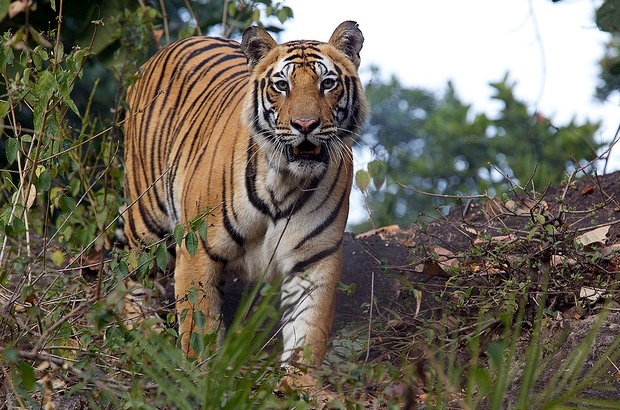
5. PNP is a part of Project Tiger that aims to preserve the tiger population in India.

6. Besides tigers, dholes, gaur, sambar, wild pig, Indian giant squirrel, Travancore flying squirrel, jungle cat and sloth bear are some of the mammals of this park.

Dholes in Periyar National Park
7. This park was also taken under Project Elephant to ensure the safety of the elephants in this park.

8. Around 265 species of migratory and resident birds can be seen here. The tropical evergreen and moist deciduous forests provide an excellent habitat for the birds.

9. The best way to see wild creatures and birds in Periyar National Park is a boat cruise in Periyar Lake. Besides boat cruise, jungle safaris are also available to explore PNP.

Boat Cruise on Periyar Lake
10. The best time to visit Periyar National Park is from October to June (visit here for more information) when the weather is favourable.

Our Entry for ABC Wednesday - P is for Protected Reserve of Periyar National Park

Friday, October 11, 2013

Manas National Park - Home of Endangered Species

Manas National Park is located in Assam, India.  It spreads in an area of 360 square km. Name of the park is placed over the Manas River. The park is basically known for its rare & endangered wildlife species like Assam Roofed Turtle, Hispid Hare, Golden Langur and Pygmy Hog and is part of Project Tiger. Manas National Park was declared a wildlife sanctuary on October 1, 1928 and also listed in the UNESCO world heritage sites in 1985. Here, some of the best features of the park are given:-

Manas National Park
1. It is a perfect home for wild buffalo, elephant, tiger, rhino and for the thousands of endangered species that listed in the IUCN Red Book. Asiatic buffalo is one of the highlighted species of this park. It is a paradise for these species.

 
Elephants in Manas National Park
2. Flora of the park is gives it a picturesque view. The main vegetation of the park includes Sub-Himalayan light Alluvial Semi-Evergreen forests in the northern part; East Himalayan mixed Moist and Dry Deciduous forests, Low Alluvial Savanna Woodland and Assam Valley Semi-Evergreen Alluvial Grasslands. Assam Valley Semi-Evergreen Alluvial Grasslands covers around 50 % of the park.

View of the hills inside Manas National Park
3. Total 543 species of plants, 374 species of dicotyledons, 139 species of monocotyledons and 30 species of pteridophytes & gymnosperms are available there.

4. Fauna of the park include 55 species of mammals, 380 species of birds, 50 species of reptiles and 3 species of amphibians.

Langur in Manas National Park
5. The popular faunal species are Asian Elephants, Indian Rhinoceros, Gaurs, Asian Water Buffaloes, Indian Tigers, Leopards, Clouded Leopards, Capped Langurs, Asian Golden Cat, Slow Loris, Assamese Macaques, Barking Deer, Chital, Black Panther, etc.

6. Manas National Park has more than 450 species of birds and has the largest population of Bengal Florican that attracts most of the people towards it.

Bengal Florican - Image by NaveenGuruprasad on flickr.com
7. The major bird species include Giant Hornbils, Kalij Pheasants, Egrets, Pelicans, Brahminy Ducks, Scarlet Minivets, Fishing Eagles, Herons, Harriers, Mergansers, Magpie Robins, Bee-Eaters, etc.

8. More than 50 species of reptiles are available there. Jeep safari and an Elephant safari are available there to explore the park perfectly. It may be a thrilling experience to watch the animals from the open roofed jeeps and is great fun also.

Indian Rhinoceros
9. The climate of the park varies from season to season. The minimum temperature is approximately 15 degrees Celsius and approximately 37 degrees Celsius is the maximum temperature in all the seasons. Heavy rainfall also occurs during the summer season, i.e. from May to September.

10. Best season to visit Manas National Park (Source of information) is between November and April as during these seasons, one can see the local animal species as well as the migratory birds. Time to visit the park is from 9 to 12 AM and from 2 to 5 PM.

Our Entry for ABC Wednesday.

Tuesday, October 8, 2013

Kaziranga National Park – Home to Rhinoceros

Kaziranga National Park is located in Assam, India. It spreads on the area of 430 Sq kms along the river Brahmaputra on the north side and the Karbi on the south side. It is popular for the great one-horned rhinoceros and wild elephants. In 1974, it has been declared as a National Park. This is the only area which is least disturbed by the human beings. So, it is a paradise for both flora and fauna. Some of the best features of the national park are as follows:-

1. This national park is a world heritage site and is inhabited by the world’s largest population of one-horned rhinoceroses.

Great One-horned Rhinoceroses
2. It is also home to the largest population of wild water buffalo across the globe.

Wild Water Buffalos
3. Besides these, Wild Asiatic water buffalo, eastern swamp deer, elephants, gaur and sambar are also in a large number. So, many rare species are also found there.

4. Different species of birds can also be seen chirping from one tree to another and makes the atmosphere more natural. Many migratory birds, water birds, predators, etc. are found there in a large number. Great Indian Hornbil, Marsh Babblers, Indian Roller, Bengal Florican, Indian Vulture, Hodgson’s Bushchat, etc. are some of the other species of the birds.

Indian Roller
5. The park can be seen in different ways like through Jeep Safari, Elephant Safari, Boat rides on the Brahmaputra River.

6. Small herbivores that found in the park are the Indian Muntjac, Wild Boar and Hog Deer.

Hog Deer
7. The large number of tigers, due to conservation efforts, is also a major achievement of this National Park. This park also comes under the Project Elephant.

8. Reptiles are also there in a large number. Two of the largest snakes in the world namely Reticulated Python and Rock Python found there. Others are King Cobra, Krait, Viper, Assam Roofed Turtle, Water Monitor, Bengal Monitor Lizard, tortoise, etc.

9. The climate of the place is another thing that keeps the park full of flora and fauna in every season of the year. It is moderate in summer while nights are chilly in winter. Rainfall is very heavy during the monsoon season.

View of Kaziranga National Park
10. A time of period between November to March (Information source) is the best to see the park in the best natural way.

Wednesday, September 18, 2013

Exploring the Jungles of Gir Forest National Park

The state of Gujarat in India, like all the other states, is like a bag full of candies. It has something for everyone. There are many amazing destinations to visit in Gujarat. While a large number of people visit Gujarat for its unique culture, the wildlife of Gujarat also has a lot of takers. The jungles of the Gir Forest National Park are ideal for exploring the rich biodiversity of Gujarat. Here are some interesting facts one should know about Gir National Park before visiting it.

1. The Gir Forest National Park and Wildlife Sanctuary were established in 1965.

2. It covers a very large area of 1412 km² inside which, 258 km² is a fully protected area. The remaining area is a wildlife sanctuary.

Asiatic-Lion-Gir-National-Park

3. The forests of Gir were a protected area under the princely state of Junagadh.

4. The main attraction of Gir National Park is the Asiatic Lion population that is more than 400.

5. The Gir National Park is also the only remaining natural habitat for these lion subspecies.

6. The presence of a supportive natural environment for Asiatic Lions makes it one of the most important protected areas in Asia.

Striped-Hyena-Gir-National-Park

7. Besides Asiatic lions, other carnivores of Gir National Park are the Indian leopards, sloth bears, jungle cats, striped hyenas and golden Jackals. The herbivorous population includes chital, nilgai, sambar, four-horned antelope, chinkara and wild boar.

8. The bird population of Gir consists of 300 different species and an astonishing number of 2000 species of insects can be found in the forests.

9. Around 400 species of plants are also recorded in Gir. The forest mostly consists of dry deciduous trees.

10. The best time to visit the Gir National Park is from December till the end of March.
Our entry for ABC Wednesday.

Tuesday, September 10, 2013

An Insight Inside Dudhwa National Park

The lesser famous Dudhwa National Park lies on the edge of India-Nepal border in the foothills of the Himalayas. It is located in Lakhimpur Kheri, the largest district in the state of Uttar Pradesh. The vast marshy grasslands and dense forests protect many endangered species of flora and fauna. This park has some of the best Sal tree forests in the world. Despite being rich in wildlife and natural beauty, Dudhwa National Park remains a less popular tourist destination. Let us take an insight inside the Dudhwa National Park.

1. Dudhwa National Park was established in 1958 as a wildlife sanctuary for the protection of Swamp deer population in the area.
Swamp Deer
2. The area of the park stretches to about 490.3 square km with a buffer zone of 190 square km.

3. This park is home to some of the best remaining grasslands and forests of the Terai belt in the Himalayas.

4. It was elevated up to the status of a national park in 1977 and became a part of Project Tiger in 1987.

5. Billy Arjan Singh played an important role in establishing this protected area as a national park.

Billy Arjan Singh
6. The major attraction of this park is the ‘Barasinghas’ (Swamp Deer). It is estimated that around half of the world’s population of Swamp Deer lives in this park.

7. Reintroduced Bengal Tigers also thrive in the rich Terai ecosystem. Beside these, Indian one-horned rhinoceros and the rare Hispid Hare also make this park their home.

8. The uncharted forests of Dudhwa are a treat for bird-watching. The checklist of birds in the park goes up to 400 species. This includes both migratory and resident birds.

9. While visiting the Dudhwa National Park, one can also make a tour to the Frog Temple. It is a temple dedicated to Lord Shiva. The design of the temples follows the unique Manduk Tantra and appears to be built on the back of a giant frog.

Frog Temple
10. The best time to visit the Dudhwa National Park would be after November till early June.

Following the trend of ABC Wednesday
I for Insight and Inside

Thursday, August 29, 2013

Wildlife and Glamour in Corbett National Park

The Jim Corbett National Park is located in Uttarakhand’s Nainital district and is a major tourist destination for wildlife tours. It is located in the outer foothills of Himalayas and is a biosphere of a variety of plants and animal species. It is one of the best places in north India for tiger tours. But, the natural beauty of the park has attracted many others than just wildlife tourists. Corbett Park has caught the eye of the glamorous Bollywood in the recent years. Here are few interesting things to know about Corbett National Park.

1. Established in 1936 with an area of 520 sq. km, Corbett National Park is thus, the oldest national park in India.

2. Edward James Jim Corbett was a renowned British hunter who later turned a conservationist. He played a crucial role in the establishment of this park.

Edward James Jim Corbett
3. The initial name of this park was Hailey National Park, which was then changed in 1955 to Ramganga National Park. It was finally named Jim Corbett National Park in 1956.

4. With its sub-Himalayan geographical and ecological characteristics, one can find an amazing 488 different species of plants and 110 tree species throughout the park.

5. Corbett National Park is home to around 580 species of birds, 50 mammal and 25 reptile species respectively.

Jeep Safari-Jim Corbett National Park

6. It was the first park in India that came under Project Tiger.

7. The main attractions of the park are the Asian elephants and the Royal Bengal Tigers.

Elephants in Jim Corbett National Park


8. In 2005, a Bollywood horror movie named ‘Kaal: The Jungle’ was shot inside the park.

9. Also, the 5th season of an Indian television reality show called MTV Splitsvilla was shot near the Corbett Park. This show was aired on MTV India channel.

10. The Ramganga Dam inside the park is an amazing place for bird-watching.

For some more details, you can visit:

Wednesday, August 21, 2013

Birding and Much More at Bharatpur

Rajasthan, apart from being loaded with rich heritage and colorful culture, is also home to a variety of birds. The famous Keoladeo National Park is one such place that is home to many bird species and also plays host to thousands of rare and exotic birds during different time of the year. Bharatpur is a great place to have the true birding experience. Here are some interesting things to know about if one is planning to visit Keoladeo National Park.

1. Keoladeo Ghana National Park became a protected area in 1971 and was enlisted as a national park in 1982. It falls under the Criteria X Natural type of UNESCO World Heritage Site.

Painted-Stork-Bharatpur-Bird-Sanctuary

2. Keoladeo National Park is located in Bharatpur district of Rajasthan and thus was (and sometimes even now) called the Bharatpur Bird Sanctuary

3. This park is also known as Keoladeo Ghana National Park and is named after a temple of Lord Shiva (Keoladeo) that is located inside Ghana (meaning dense) forest.


Keoladeo_Temple-Bharatpur

4. Keoladeo Ghana is famous for its bird population as 366 different species of birds can be found in the park. Out of this, 250 species are resident.

5. It is said to be the best place in Asia for bird-watching. The rich environment of Keoladeo Ghana also offers great opportunities for wildlife photography.


Great-Egret-Keoladeo-National-Park

6. Besides tourists, one can find a large number of naturalists, wildlife photographers, bird watchers and ornithologists exploring different parts of the park.

7. Keoladeo Ghana is a man-made wetland and serves many other purposes like grazing land for cattle for nearby villages, controlling floods and breeding grounds for migrating birds.


sarus-cranes

8. The wetlands of Keoladeo Ghana were previously used as hunting grounds by the Maharajas of Bharatpur.

9. Blue bull, cattle, spotted deer, sambar and wild boar are some of the mammalian animals that can be spotted inside the park.


Blue_bull-Bharatpur

10. One can visit Keoladeo during any time of the year. Visit the following link to know more details like climate and best time to visit Keoladeo Ghana National Park:
http://www.wildlife-travel-india.com/wildlife-national-parks/bharatpur-bird-sanctuary.html

Wednesday, August 14, 2013

Into the Wilderness of Bandipur National Park

The Bandipur National Park in the Karnataka state of India is a home to many endangered species of wild animals. It was established in 1974 as a national park by the government of India. This park covers an area of about 874 square km and is a part of the Nilgiri Biosphere Reserve. The dry deciduous forests of Bandipur are listed as a protected area under the Project Tiger. Here are some interesting facts about the wilderness of Bandipur National Park.

1. Bandipur National Park is located in the Chamarajanagar district of Karnataka and was declared a national park under Project Tiger in 1974.

2. It lies at the point where the Western Ghats merges with the Nilgiri Hills and is dominated by dry deciduous forest.

Bandipur-National-Park

3. Bandipur National Park along with neighboring Nagarhole National Park, Mudumalai National Park and Wayanad Wildlife Sanctuary forms the Nilgiri Biosphere Reserve. Nilgiri Biosphere Reserve is the largest protected area for wildlife in southern India.

4. Before gaining the status of a national park, the forests of Bandipur served as the hunting ground for the Maharaja of the Kingdom of Mysore.

Bandipur-National-Park-Riverside

5. The Kabini River flows on the northern side and the Moyar River on the southern side of the park. Another river, Nugu, flows through the park and thus, providing plenty of water supply.

6. The main wildlife attractions of the park are the Royal Bengal Tigers, Asian Elephants and the Chittals. The best time to visit Bandipur National Park is between April and October.

Wildlife-in-Bandipur-National-Park

7. Over 200 species of birds can be found in Bandipur National Park. This makes it quite famous for observing birds among bird-watchers and wildlife photographers.

8. It is a major wildlife weekend getaway destination from Ooty and Mysore, the two major tourist destinations in southern India.

9. Himavad Gopalaswamy Betta is the highest peak located inside the core area of the park and is a great place to spot elephants. There is a temple on the hilltop, which is a famous tourist attraction.

Himavad-Gopalaswamy-Temple-Bandipur-National-Park

10. Traffic moment is banned from night to early morning for the safety of the nocturnal animals inside the park.

Friday, August 9, 2013

Bandhavgarh – The Land of Tigers and Legends

Bandhavgarh National Park in the Umaria district of Madhya Pradesh was established in 1968 to protect the tiger population. This National Park is home to a wide variety of wild species of animals and plants. It is a popular destination for wildlife tourism in central India. Also known as the land of tigers, Bandhavgarh National Park is related to many legends. It has much more to offer to its visitors both in terms of wildlife and tourist attraction. Here are some interesting facts about Bandhavgarh.

1. Bandhavgarh National Park derives its name from an ancient fort called the Bandhavgarh (in Sanskrit) which literally means ‘brother’s fort’. It is located in the centre of the park on a hill top.

2. This park was established in 1968 by the Government of India under the Project Tiger.

Tiger-in-Bandhavgarh-National-Park


3. Before it was established as a national park, the forests of Bandhavgarh and its surrounding areas were used a gaming preserve (hunting ground) for the kings of Rewa kingdom.

4. Bandhavgarh National Park has the highest density of tigers among all the other National Parks in India.

5. It is also the first place in India where the rare white tiger was found.

Bandhavgarh-Fort-Ruins


6. The Bandhavgarh Fort, now in ruins, inside the park is said to be the oldest fort in the world that dates back around 2000 years.

7. According to Hindu mythology, Lord Ram gave this fort to his brother Lakshman after the epic battle with Ravan, to keep a watch over Lanka. Lord Ram is the seventh avatar of the God Vishnu.

Caves-in-Bandhavgarh-National-Park


8. There are many ancient caves in and around the fort with amazing carvings and sculptures.

9. Sita, of the tigress that lived in the forest is said to be the most photographed tiger in the world and also appeared on the cover National Geographic magazine.

Sita-on-National-Geographic-Magazine


10. Besides tigers, Leopards, Chital, Sambar, Barking deer and Nilgai are some of the wild creatures found in this park. Bandhavgarh National Park also has a sound population of bird species, both resident and migrating.

Wednesday, January 23, 2013

How to Catch Tigers and Birds in Corbett National Park

Knowing about a thing and experience it into reality has a big difference. Likewise, listening about Indian Wildlife and spending a couple of days amidst its dense forest and terrible sounds of wild animals is completely a different experience. If you are taking a wildlife tour in North India to explore its endangered species and animals and expecting full of adventure, then the most bizarre forest Corbett National Park can fulfill your expectation. Visit to Corbett National Park basically engaged with Tiger safari and bird watching activity that catches maximum attention of the tourist.


But, before rush for hunting of Corbett’s wildlife, it is more important to know where and how you will feel more adventure. How would you feel if you can experience Jeep safari amidst the wide diversity of flora and fauna of this national park? Hope, you would not like to miss out this opportunity at any cost. Jeep Safari in Corbett National Park is the most convenient option to explore wild tigers and birds, which drives you close to them where you can find some great snap. If you wish, then you can also enjoy elephant safari; booking in advance the tour through Erco Travels.


Sit down on your sit, hold your HD camera, tighten your belt and drive for tiger hunting. Four Jeep safari as well as elephant safari follows some predefined routes, from where tiger safari and bird watching is guaranteed. To catch the maximum numbers of wild animals, you must have to enter Dhikala, Jhirna and Bijrani zone which are famous for tiger sightseeing. Every year, flown of seasonal birds, enhances the beauty of this national park so, ornithologists can be spotted in the main bird watching areas. Kalagarh Dam and the bank of Kosi River hold the charm of forest where you can find some great photographic options of numbers of bird’s species.


Corbett tiger safari only becomes active from 15th November to 15th June, but you can book it in advance so as to get better resort, better safari tour and to get the best value of your money. Rest of the month, the park remains close due to worst climatic condition. So, don't be late otherwise, you will miss such an excellent opportunity.

Monday, May 7, 2012

Mesmerizing Moments In Ranthambore National Park

India is having many types of nature. We have desert, forest, mountain, snow, rivers and the beautiful wild life. To protect the wild life the government has taken many steps. The national parks are the result of the steps taken by the government. All over India.

There are many national parks. The largest among these national parks is the Ranthambhore national park. This park was mainly made for the tiger reserve. There are lots of tigers here and it is a heaven for the wild life lovers. They can go for a safari here to see many tigers on their way.


The tigers can be seen on the way, on the grass, basking in the sun or just relaxing. It is a pleasure to see these big cats relaxing freely in the park. There are other animals also which are found in this park like the leopard, wild bore, etc. The nature is very lovely here and nature lovers will feel this park very interesting. In the month of November when the forest is not very dense it will be easy to spot the tigers. The flora and the fauna are also very good watching. The safari may be on the elephant, jeep or the mini bus.

Ranthambore National Park was mainly established for the tigers. There are particular timings for the safari in the national parks. The people are allowed to visit in the safari in those particular timings. If the people are allowed in other timings the wild animals will be disturbed. If the park is visited in the spring season there are many types of flora and fauna which is a pleasure to watch. Nature lovers will enjoy each and every step the forest for the wild animals and the plants.


It is a mesmerizing moment when a tiger is spotted and the cameras click. The tiger will walk about majestically. They do not disturb us until they are disturbed or hungry. The real look of the tiger is an unforgettable moment in one life. The people will really enjoy each and every moment in the safari or the visit to the national park. There are many lakes and also the Ranthambore fort to be visited in the National Park. Everything is enjoyable after the stress in the urban life everyday. The animals are so carefree and not running after anything. Even if the animals are wild they are very calm and quiet which is better than the human nature.

Friday, March 30, 2012

Wildlife National Park of India

India is a country known for all its diverse environments and physical features. Among some of the best ones, the nature and the wildlife is tops the list. A person taking a India wildlife tours will have ample options in every corner of the country. This article will help you with all the top national parks in the country which are a must see in the wildlife tour.

Ranthambore National Park:


The first and the most famous national park is the Ranthambore located in Rajasthan. This was a place for hunting hobbies of the kings in the past. The two rivers, Chambal and Banas flow through the forest cover in the south and the north respectively. The main attraction of the park is the tigers and it is thereby the main attraction to the photographers. There are about 300 species of trees present in the comparatively small area of forest cover. The number also extends to the aquatic plants, birds and reptiles too. This is an area rich in diversity and one should not miss out on this.


Jim Corbett National Park:


The other national park is located in Uttar Pradesh by the name Jim Corbett National Park. This park is very much known for its tiger population along with elephants and leopards. This park was established in the year 1936 and is India’s first national park. This was a park used for hunting by the British Empire and was named after Late Jim Corbett who was a legendary hunter, naturalist, photographer and author. Project tiger was launched in this park in the year 1973. The habitat in this park supports the tiger and its prey.


Kaziranga National Park:


Kaziranga National Park is located in Assam along the massive river of Brahmaputra. This along with all the wildlife in this region makes Kaziranga a beautiful place to visit. The main attraction in this park is the Indian one-horned rhino. The forest was declared as a national park due to the poaching done on this species. This is also a home to the Indian Bison, elephants, swamp deer, and such other fauna. Tigers are also found in this park. This is also an attraction as a bird watching site to many foreign tourists. One should not miss the elephant safari in this park.


Kanha National Park:


Kanha National Park is a well known tiger reserve located in Madhya Pradesh. Apart from tigers, leopards and bears are the main attraction of this place. The Blackbuck and the Antelope also make this national park their home. This park too has the elephant safari to spot animals in the wild.


These are some of the most well known national parks in the country. There are more to name like the Sundarbans in west Bengal, the Royal Chitwan Park and the Bandipur National Park. There is a national park in every state of the country and each has its own attractions. The internet has information about the access and travel details to the parks. Bookings too can be done online after finding out which is the best India Travel Agent in the business.

Thursday, November 24, 2011

Indian Wildlife Tour An Adventure of Indian Royally Wood Country

India Wildlife tour is a magnificent way to find peaceful nature of violence yet. And hence has a wide variety of animals, birds and marine life inhabiting its forests, rivers and seas. The country has a number of protected wildlife sanctuaries, which over the years have become a haven to migratory birds from the world over as well. The wildlife tours give you an excellent opportunity to observe animals and birds in their natural habitat.

India is a majestic snow crowned mountains, green forest, valleys; rivers blue efflorescence and diverse plant life as well as animate requiring a danger to keep coming back. India has 70 wildlife national parks and wildlife sanctuaries.

Some popular wildlife Parks in India are the Jim Corbett National Park, Wildlife Sanctuary in the Gir, Sariska National park, Ranthambore National Park, Bandhavgarh National Park and many more. These wildlife parks are famous for some sinning animal species and plants that are a bargain for all nature fanciers.


Jim Corbett Park is the best place for tiger lover and wants to see tiger over the Elephant back. It is named after hunter turned philosophical theory of Sir Jim Corbett; it houses different variety of mammals, birds, reptiles and floras. This National Park in India is a famous among escapade search, nature lovers and wildlife partisans. Elephant safaris, Jeep Safaris and adventure traveling are active one can indulge at tourist wildlife in India in the Corbett national parks. Other national park is lionized in Ranthambore which is located in the Rajasthan;

Ranthambore National Park shoot wildlife lovers all over the world for exciting tiger tour to India. The Park is known worldwide for the royal Bengal tigers and Banyan trees. The activities in park are Jeep Safari, elephant safari, trekking and places to see are Ranthambhore fort, Jogi Mahal and many others.


Tiger Spotting at Sariska National Park, Near Alwar, Rajasthan. Sariska park is home to numerous carnivores including Leopard, Wild Dog, Jungle Cat, Hyena, Jackal, and Tiger. These feed on an abundance of prey species such as Sambar, Chitel, Nilgai, Chausingha, Wild Boar and Langur. Sariska is also well known for its large population of Rhesus Monkeys, which are found in large numbers around Talvriksh.

Winter season is the keenest intelligence of year to start journey Indian wildlife adventurous tour pleasure in watcher nature priming the smartness of the affect last artist. Each year we Visit lots of India Wildlife Tours and enjoy Wildlife jeep safari, elephant safari, which is about in the morning and sets at the end of the last evening.